The complete guide
Your first float tube: what to check before your first session
A float tube is one of the cheapest ways into still-water fishing, but a few checks before your first session save a wasted trip.
Confirm the weight rating covers you
This tube is rated to 150kg. Add your own body weight to whatever you plan to carry — tackle bag, net, extra rods — and leave a margin rather than fishing right at the limit. Buoyancy drops as load rises, and you want spare capacity, not the bare minimum.
Inflate it at home first
Before you drive anywhere, inflate the tube fully at home and leave it for half an hour. This shows up any weak seams or valve issues while you can still exchange it, rather than on the bank. Check the pump's nozzle fits the valve properly — a poor seal is the most common reason a "faulty" tube is actually just under-inflated.
Pack the included kit, not extras
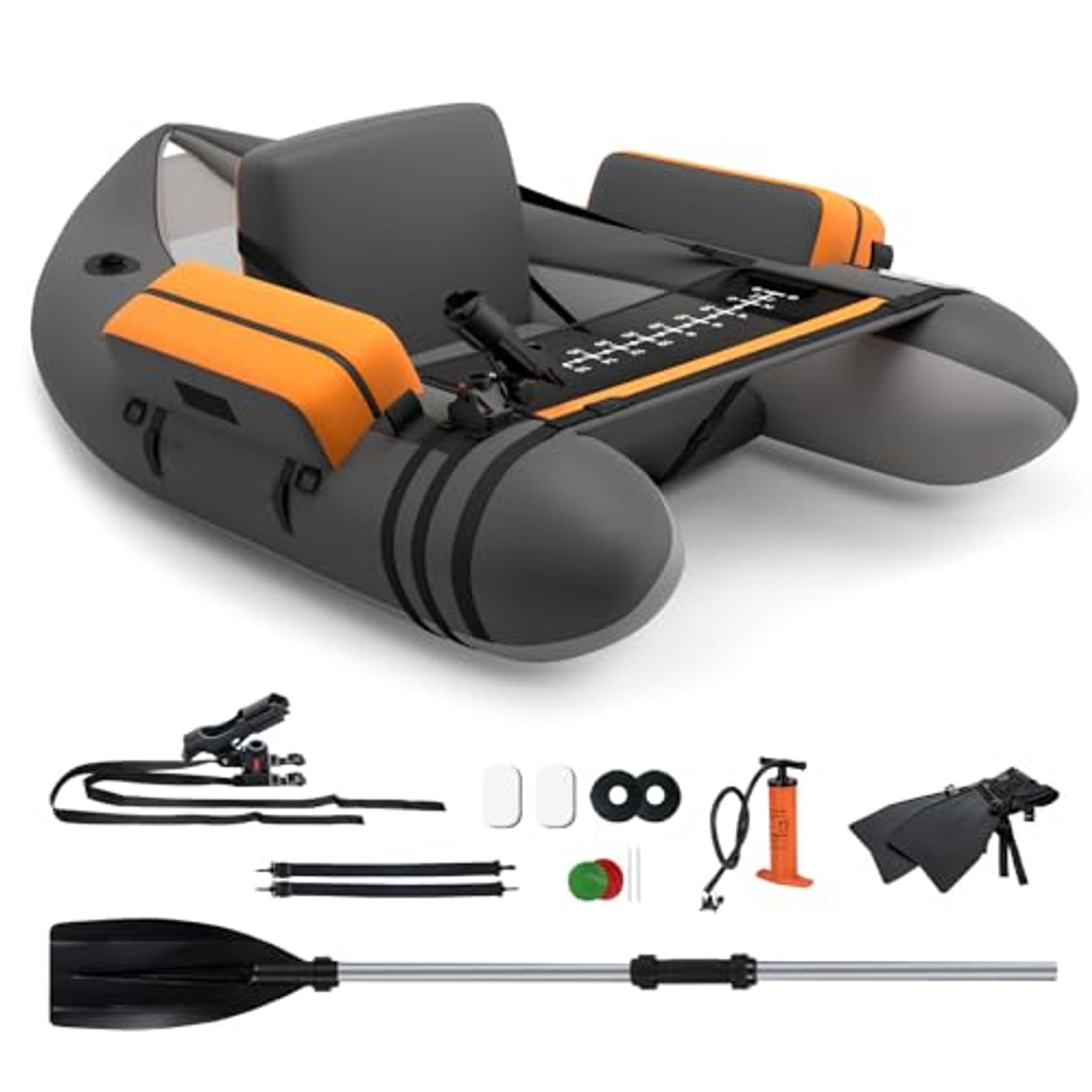
The rod holder, fish ruler and flippers are already in the box, so resist the urge to over-pack for trip one. Bring the paddle even if you plan to use flippers — a spare means of propulsion matters if a fin strap fails mid-session.
Where to fish it first
Pick a small, sheltered stillwater for your first outing rather than open, windy water. Belly boats sit low and are affected by wind more than a bank angler expects; a calm pond lets you learn how the tube handles before you take it somewhere more exposed.