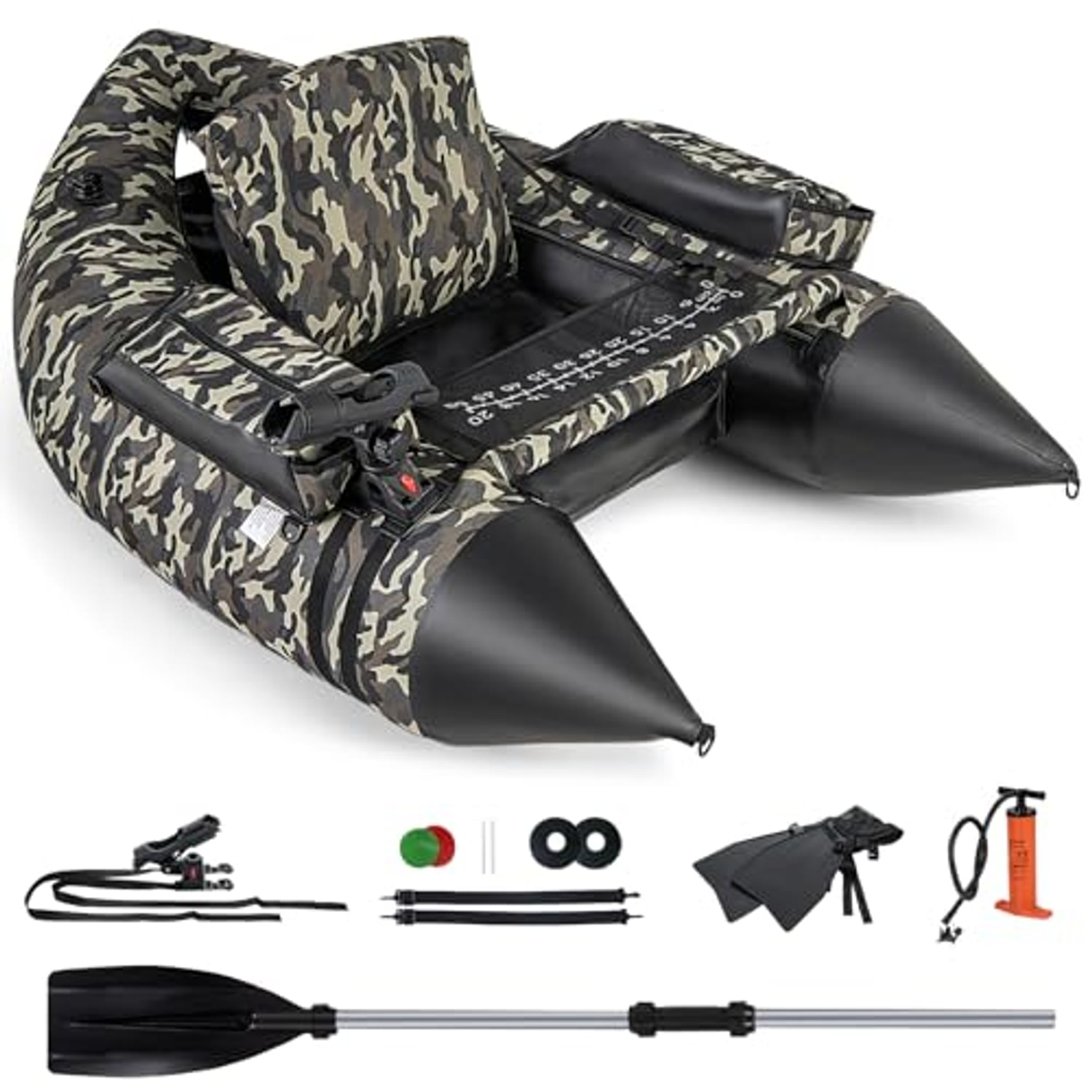
The complete guide
Why hull shape matters more than most anglers expect
Most belly boat buyers compare load capacity and price and skip past hull shape entirely — but shape is what decides how the boat actually feels once you are on the water.
Round tubes vs V-shaped hulls
A classic round float tube is stable and cheap to make, but it has no natural direction — every kick can send it slightly off-line, and correcting that costs energy over a session. A V-shaped rear, like this one, gives the hull something to track against, so straight-line finning takes less effort and holds a truer course.
When it matters most
If you mostly anchor up close to the bank and stay in one spot, hull shape barely matters. If you regularly fin fifty metres or more to reach a swim, cover a drifting line while trolling a lure, or fish larger stillwaters where positioning matters, a V-shaped hull earns its keep session after session.
The trade-off
The larger 150 x 110 x 50cm footprint that comes with the V-shape means a bit more bulk to carry and store compared with a compact round tube. For most anglers who fish regularly rather than occasionally, that trade is worth making.
Getting the most from it
Fin in short, even strokes rather than long kicks — a V-hull tube rewards a steady rhythm more than powerful, irregular kicks, which is where the tracking benefit actually shows up.