The complete guide
Reading a belly boat's weight rating properly
Every float tube lists a weight rating, but few buyers actually work out whether it covers them before ordering. Here is how to do it properly.
Add up your real load, not just your body weight
Your weight rating needs to cover you, your clothing (heavier in a wetsuit or waders), your rigged rod, tackle bag, net, and anything else you carry afloat. It adds up faster than most anglers expect — a rough tackle bag alone can be 3-5kg before you add a net or a second rod.
Leave a genuine margin
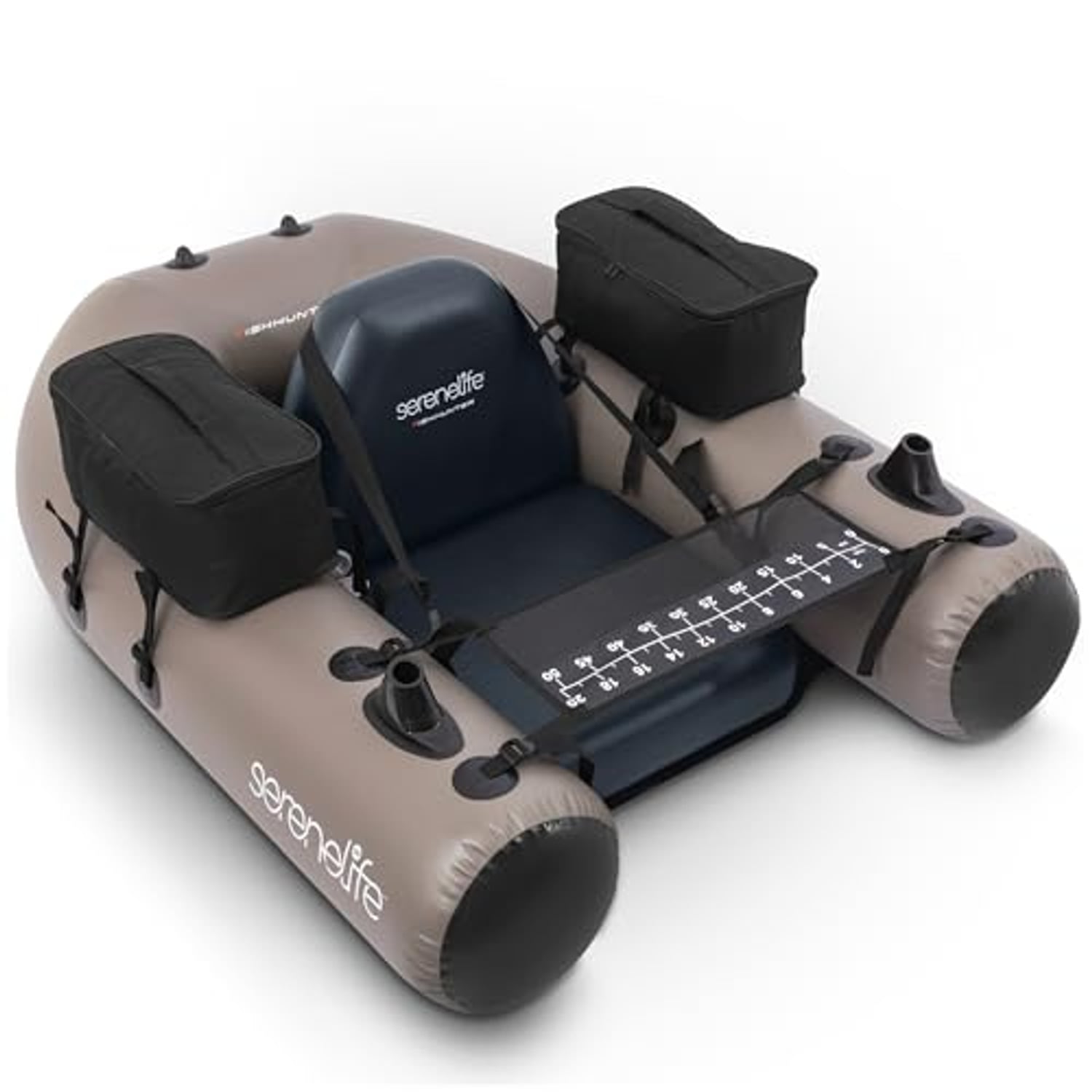
Buoyancy and stability both fall as you approach a tube's rated limit, not just at the point you exceed it. Aim to stay comfortably under the stated capacity rather than treating it as a target — this tube's 220lb rating gives useful headroom for most single anglers plus gear.
Why laminated, UV-resistant PVC matters
Fabric that degrades in sunlight becomes brittle and more prone to punctures over time, which is a real risk on a boat you are sitting inside on the water. Marine-grade, UV-resistant material is worth the small extra cost if you fish regularly through summer.
Using both rod holders well
With two holders, rig one rod for your primary method and a second as backup or for a different depth or presentation, rather than fishing both actively at once — swapping between two rigged rods is faster than re-tying, and safer than juggling a spare rod loose in the tube.